Is One of Your Best People About to Walk Out the Door?
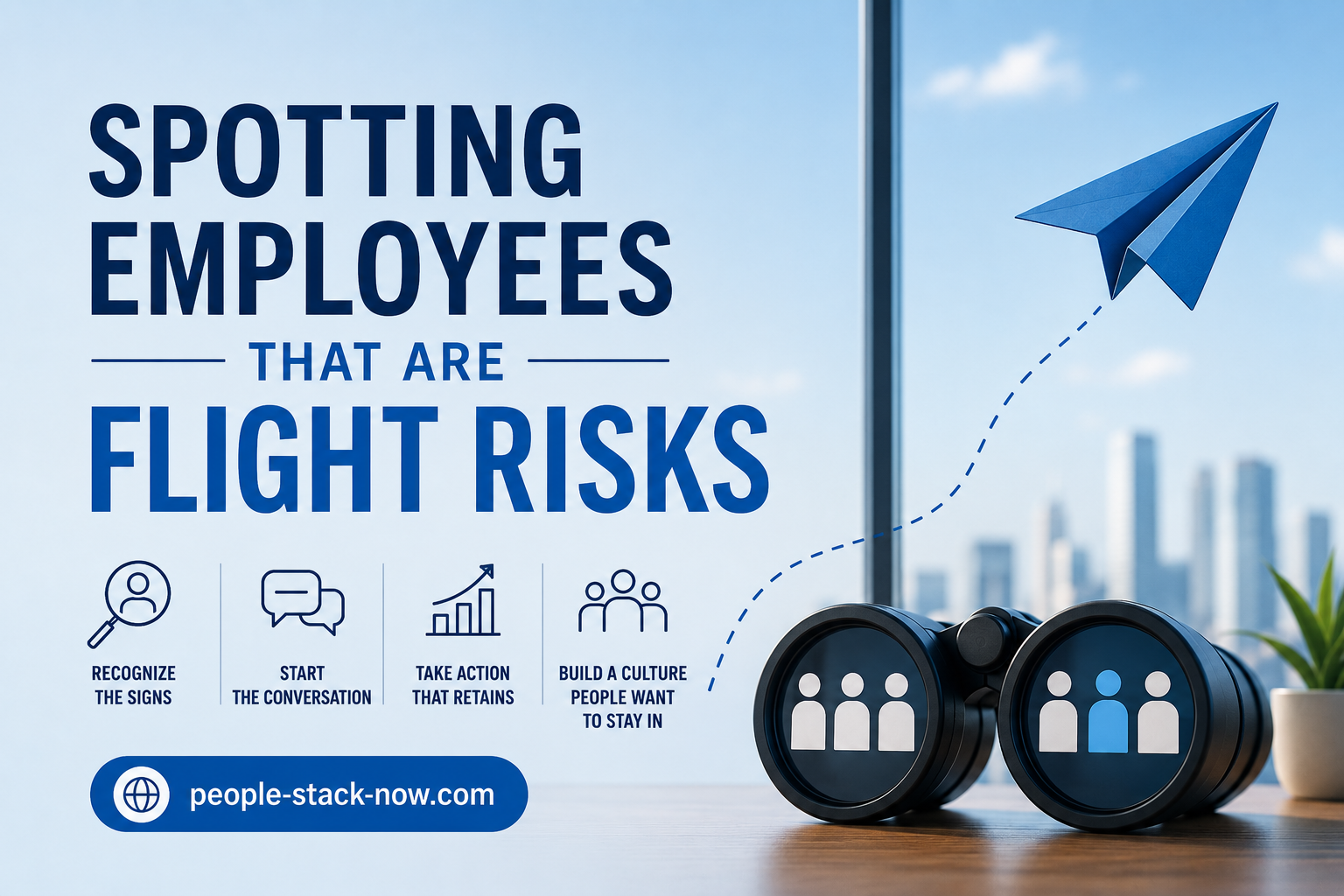
How to detect an employee flight risk before it's too late.
Most resignations don't come out of nowhere.
In reality, the average employee has been signalling their intent to leave for months before they hand in their notice. The problem is that most organizations aren't watching for it and by the time they find out, it's too late to do anything about it.
In Canada, the average cost of replacing a single employee has risen to $30,680 and for senior or technical roles, that figure can climb to 200% of their annual salary. For many companies, losing even one or two key people in a year can have a significant impact on budget, team morale, and operational continuity.
The good news? Research suggests employers can prevent up to 78% of employee departures if they have the right systems in place to catch the signals early. TestGorilla
This post breaks down what those signals look like, what's driving them, and what you can do before the resignation lands on your desk.
What Is a Flight Risk Employee?
A flight risk employee is someone who is likely to voluntarily leave the organization in the near future - whether in the next 3, 6, or 12 months. They may be considering leaving due to general dissatisfaction, lack of growth opportunities, or other personal reasons. Talkspace
Flight risk isn't limited to disengaged or underperforming employees. High performers are often just as likely to leave - sometimes more so, particularly when they feel their contributions aren't being recognized or their career has stalled.
Organizations often struggle to retain key talent because they lack early visibility into employees' unique experiences, and only become aware of an employee's intent to leave when a resignation is submitted. McLean & Company
The Warning Signs: What to Watch For
1. Behavioural Shifts Behavioural changes are often the earliest and most visible indicators that something is wrong. Before an employee resigns, behavioural changes are typically visible to attentive managers, including withdrawal from discretionary effort, reduced interaction with team members, increased distance from management, and a pattern of taking unplanned leave. Treegarden
Other behavioural red flags include:
Declining participation in team meetings or brainstorming sessions
Reduced enthusiasm for new projects or initiatives
Increased cynicism about leadership or company direction
Less interest in training, certifications, or expanding their responsibilities Allhrsoftware
2. Performance Changes A consistent decline in productivity levels or quality of work can signal that an employee is mentally checked out. This isn't always dramatic - it might show up as missed deadlines, less initiative, or a shift from proactive to reactive work habits. Allhrsoftware
3. Tenure Milestones Voluntary turnover tends to peak at 18–24 months and again at 36–48 months. These are high-attention windows for HR and managers. Proactive conversations during these periods before dissatisfaction hardens into a decision can make a meaningful difference. Treegarden
4. Compensation Drift Pay is a powerful and often underestimated driver of attrition. Employees whose compensation has fallen below market by more than 10% are 1.8x more likely to be actively job searching. Regular compensation benchmarking isn't just good HR practice - it's a retention tool. Treegarden
5. Manager or Team Changes Team members who lose a manager they respected are at heightened risk of leaving. Similarly, peer departures from the same team can trigger a ripple effect. When one person leaves, others start to reassess. Treegarden
6. Digital Signals A sudden update to a LinkedIn profile - new skills added, a refreshed summary, or a surge of activity is one of the most overlooked indicators that an employee is testing the market. While it isn't definitive, it's worth noting as part of a broader pattern.
What's Driving It?
Identifying the signs of flight risk is one thing. Understanding the root causes is what enables effective intervention. The most common drivers include:
Stalled career growth. Employees who don't see a clear path forward will look for one elsewhere. Warning signals like reduced motivation and disengagement often stem from root causes such as stalled career growth, low recognition, and a lack of trust in leadership. HR Dive
Compensation below market. While pay isn't everything, a common belief is that compensation is the central driving force behind turnover, and while over-compensating won't fix a poor work environment, being paid too little will certainly result in high turnover. Psychometrics Canada
Poor management relationships. Employees don't leave companies - they leave managers. The quality of the direct manager relationship remains one of the strongest predictors of whether someone stays or goes.
Lack of recognition. Consistent effort without acknowledgement erodes engagement faster than most leaders realize. Low engagement scores in employee surveys often signal dissatisfaction, showing up as decreased productivity, lack of enthusiasm, and low morale. Get Staffed
Workload and burnout. Among employers anticipating higher turnover in 2026, 29% point to increased workplace demands as a leading cause. An unsustainable workload is a silent flight risk accelerant. Canadian HR Reporter
How to Proactively Assess Flight Risk
Stay Interviews
One of the most underutilized tools in HR. Unlike exit interviews, which capture information after the fact - stay interviews are conversations held while the employee is still with you. They are ideally conducted by the direct manager rather than HR to maintain the trust relationship, and work best on a semi-annual cadence for all employees, and quarterly for high performers or those showing early flight risk signals. Treegarden
Key questions to ask:
What makes you want to stay?
What might make you consider leaving?
Is there a role or opportunity elsewhere in the company that interests you?
What could we do differently?
Pulse Surveys and Engagement Data Regular, lightweight pulse surveys surface attitudinal signals that performance data alone won't catch. Areas to gather feedback include job satisfaction with role, manager, work-life balance, and growth opportunities — since dissatisfaction in these areas predicts turnover. Hrbrain
Manager Conversations and 1:1s Research suggests that flight risk signals intensify in the three months before a resignation becomes firm. Managers who conduct monthly 1:1s and pay attention to engagement shifts have the best chance of intervening during this window. This requires managers who are trained to notice, and empowered to act. Treegarden
HR Data and Analytics Look beyond engagement surveys to quantitative signals: compensation that has drifted below market-median by more than 10%, no promotion in 18+ months for a high performer, a recent manager change, peer departures from the same team, and declining scores on pulse survey questions about manager quality and growth opportunity are all meaningful data points. Treegarden
When You Identify a Flight Risk: What to Do
Identifying the risk is only valuable if it leads to action, and the action needs to match the root cause. Compensation-driven risk requires a compensation adjustment; recognition alone won't fix a pay gap. Growth-driven risk requires a concrete career path or stretch assignment. Manager-driven risk may require a discreet manager change or skip-level support structure. Culture-driven risk is the hardest to address quickly and may require an honest conversation about organizational fit. Treegarden
One important note: not every flight risk employee can - or should be retained. The goal isn't to keep everyone at all costs. It's to make deliberate, informed decisions about where to invest your retention effort, and to avoid being blindsided.
The Bottom Line Every employee departure has a story but too often, that story is only told in the exit interview, or not at all. McLean & Company
The organizations that retain their best people don't wait for the resignation. They build habits, systems, and conversations that surface risk early, and they give managers the tools to act on what they find. The cost of doing nothing is real and rising. The average cost of turnover in Canada has risen to $30,680, and for larger organizations, the financial and cultural impact compounds quickly. Talent Canada
The investment required to catch a flight risk early - a thoughtful conversation, a compensation review, a career development plan is a fraction of that.
Start there.
People Stack Now offers ready-to-use HR templates and toolkits built for HR professionals and founders who need practical, professionally designed resources — without the hours of research.